

Mould removal products, delivered free
Clear the mould yourself. Keep it from coming back.
Bleach-free mould remover, stain gel, anti-mould paint and the protective gear to use them safely. Free tracked delivery to every Australian state and territory.
- Free tracked delivery
- 14-day returns
- Secure checkout in AUD
Free AU Delivery
Secure Checkout
14-Day Returns
Bleach-Free Mould Pro


Match the product to the problem
Which product do I need?
Start with where the mould is. Most homes need a remover, something for the stubborn stains, and gear to keep spores off you while you work.
Walls, ceilings and windows
Spray Mould Pro 750ml on the patch, let it foam, then wipe it clean. It's bleach-free and low-fume.
Whole rooms and repeat jobs
Mould Pro 5L is the same formula in a refill size. Use it to refill your spray bottle for big rooms, rentals or a whole house.
Grout, silicone and seals
GlassGuard stain remover gel clings where sprays run off. Apply it, leave it, then wipe. No scrubbing.
Repainting a damp room
Once the wall is clean and dry, roll on AerisMouldGuard Mould Stop Paint. It's made for bathrooms, laundries and kitchens.
Musty cupboards and wardrobes
Open a tub of SAN-AIR Air Purifier Gel and set it down. No power, no filters, no noise.
Protecting yourself
Wear a half-face respirator, coveralls and nitrile gloves so spores and splashes stay off your skin and out of your lungs. Browse all our safety gear.
A Closer Look
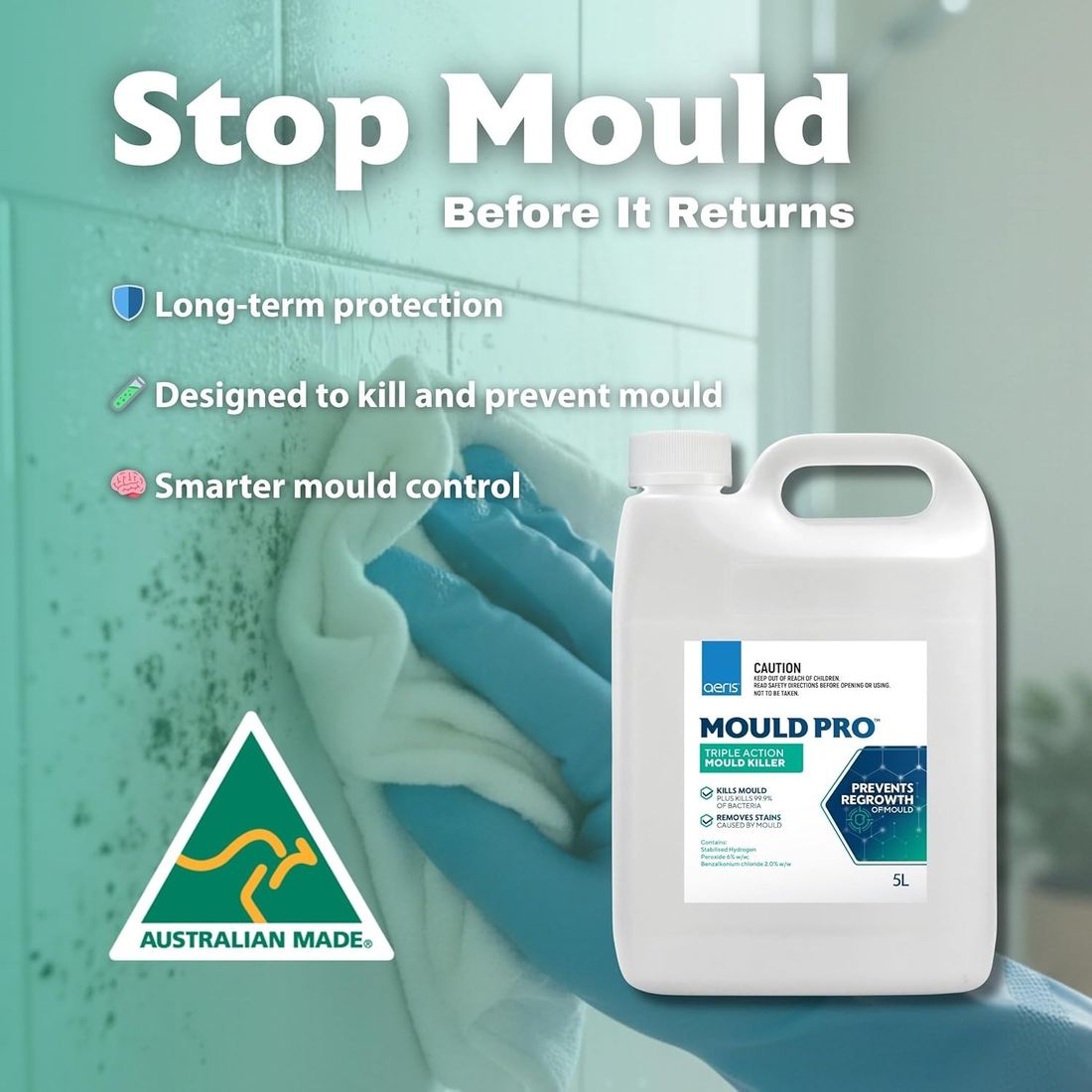
See Mould Pro in detail
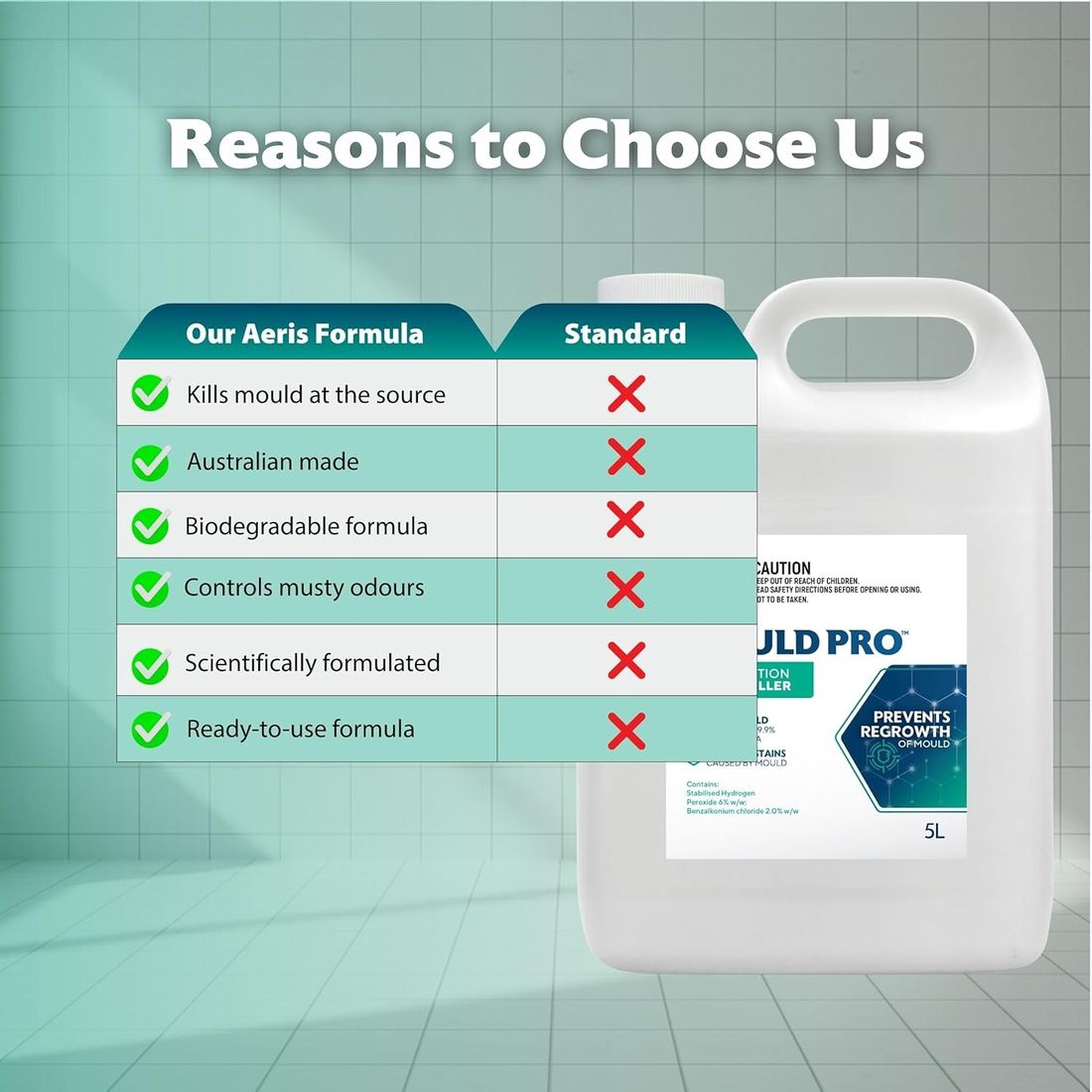
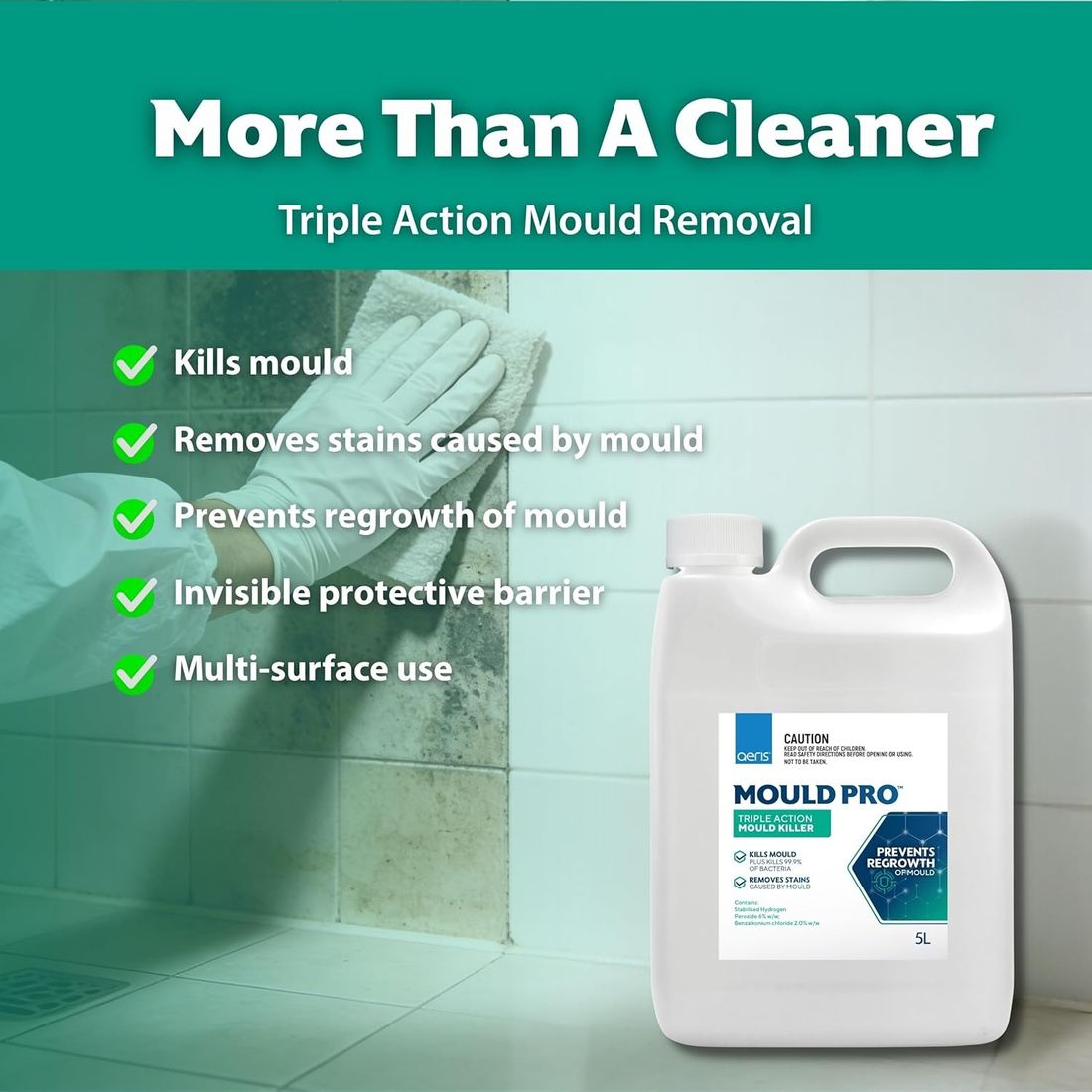
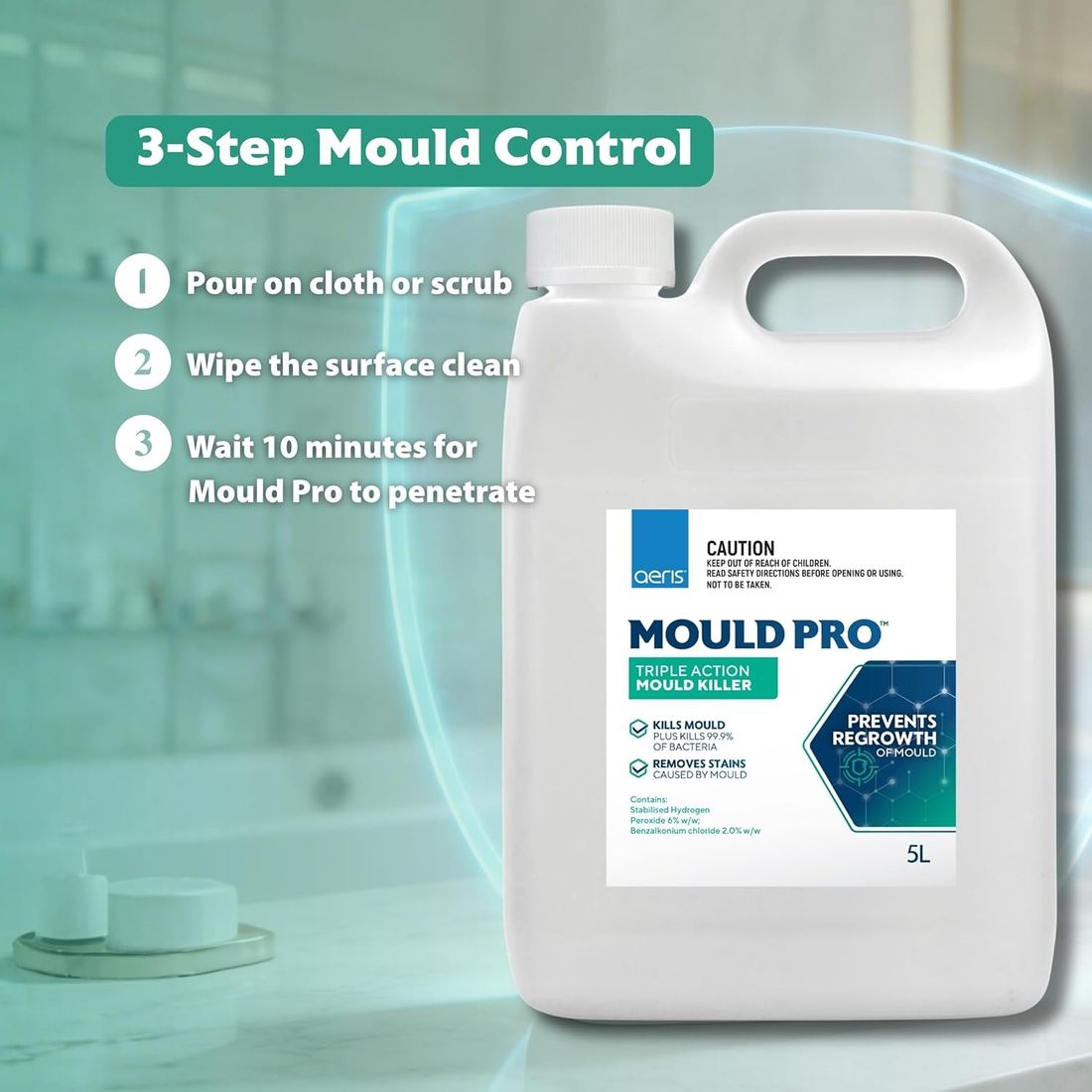
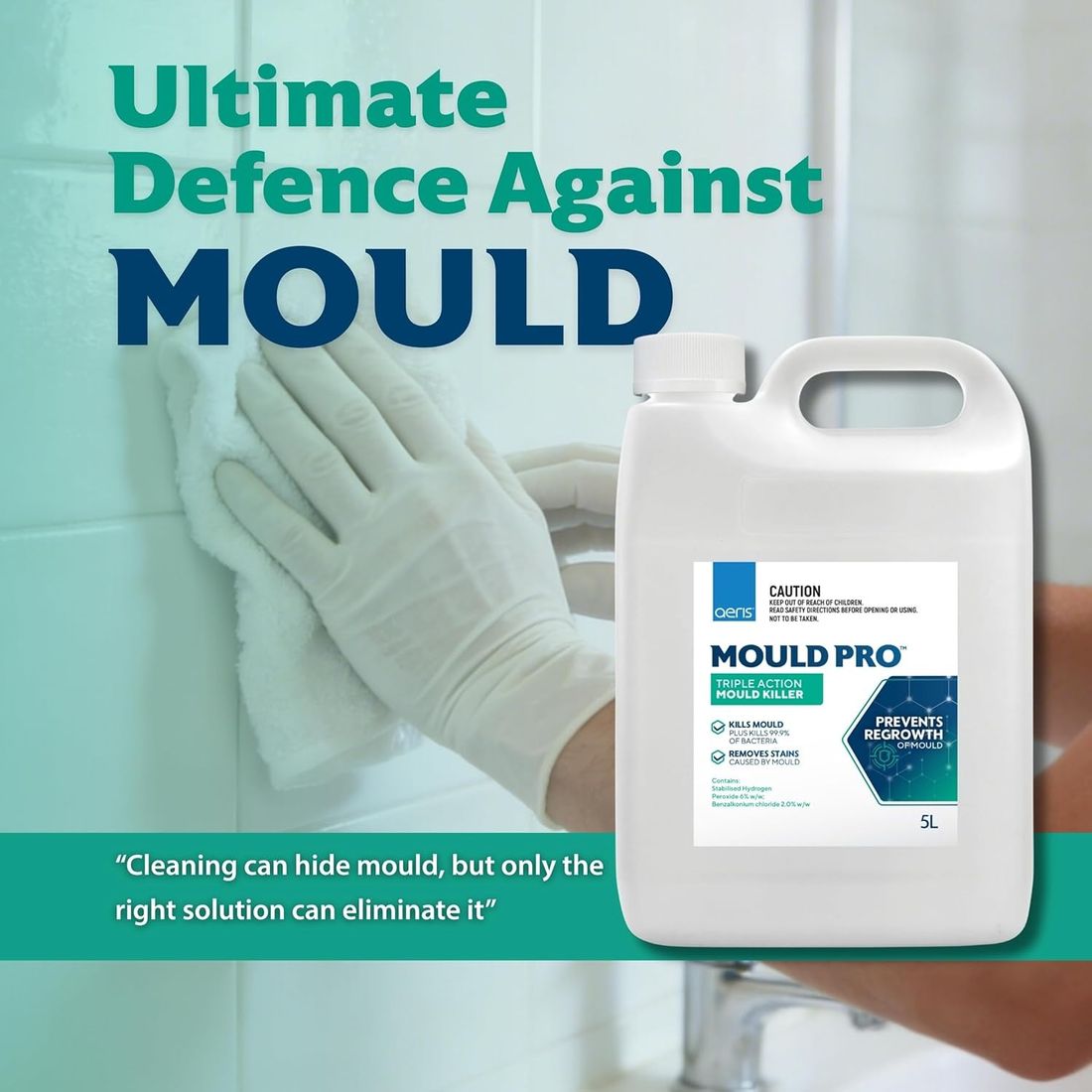
From the bleach-free hydrogen peroxide formula to the simple 3-step application, here's a closer look at what you'll be using.

Do it yourself
Clear a mould patch in four steps
This works for most surface mould on walls, ceilings, tiles and windows. Read the label on each product before you start.
1
Gear up and open a window
Put on a respirator, gloves and coveralls. Get air moving through the room before you disturb anything.
2
Spray and let it foam
Apply Mould Pro to the mould. It foams white on contact, so you can see where it's working. Use the gel on grout and seals.
3
Wipe clean and dry the surface
Wipe the area down, bag the cloths, and let the surface dry fully. Mould grows back on damp surfaces.
4
Fix the damp, then protect
Find out where the moisture is coming from. Once the wall is dry, a coat of anti-mould paint helps keep it clean.
Questions, Answered
Frequently Asked Questions
What is the best mould remover for walls and ceilings?
For most painted walls, ceilings and window frames, a bleach-free hydrogen peroxide remover like Mould Pro works well. Spray it on, let it foam, then wipe it clean. The 750ml bottle suits one room. The 5L refill suits bigger jobs.
Is Mould Pro bleach-free?
Yes. Mould Pro uses hydrogen peroxide instead of bleach. It foams white on contact, so you can see where it's working, and it's low-fume.
Why not just use bleach on mould?
Bleach can lighten a stain, but on porous surfaces like plaster, timber and grout it often doesn't reach the roots. The mould looks gone, then grows back. A hydrogen peroxide remover is a better choice for those surfaces.
What's the difference between Mould Pro 750ml and 5L?
It's the same formula in two sizes. The 750ml bottle is a handy size for one room. The 5L is a refill for whole rooms, rentals, repeat treatments or more than one home.
How do I get mould out of shower grout and silicone?
Sprays run off vertical grout lines. Use GlassGuard Miracle Mould Stain Remover Gel instead. It clings to grout, silicone, caulk and washing-machine seals. Apply it, leave it, then wipe or squeegee it off.
Can I paint over mould?
No. Paint over live mould and it can grow straight through the new coat. Clean the mould off first, let the surface dry fully, then paint with an anti-mould coating like AerisMouldGuard Mould Stop Paint.
Where can I use AerisMouldGuard Mould Stop Paint?
It's an interior coating for bathrooms, laundries, kitchens and other damp rooms. It's white, matte, ultra-low VOC and very low odour, and comes in a 5 litre tin for brush or roller.
What does the SAN-AIR Air Purifier Gel do?
It's a no-power, no-filter tub you open and set down in a bathroom, bedroom, wardrobe or cupboard. The gel works on airborne microbes, mildew, odours and dust mites in that space. Use it alongside better airflow, not instead of cleaning visible mould.
What protective gear do I need to clean mould?
At minimum, a respirator with filters, eye protection and gloves. For bigger patches or black mould, add disposable coveralls so spores don't end up on your clothes. Our half-face respirator kit includes anti-fog goggles and spare filters.
Is a dust mask enough for mould?
No. A basic dust mask doesn't seal well enough to stop fine spores. Use a half-face respirator with proper filters, and goggles to protect your eyes.
Should I use disposable or reusable gloves?
Use disposable nitrile gloves for contaminated jobs and bin them afterwards. Reusable chemical-resistant gloves suit regular cleaning, as long as you rinse them well after each use.
How do I clean black mould safely?
Put on a respirator, goggles, gloves and coveralls first, and open a window. Don't dry-scrub it, which throws spores into the air. Spray it with a mould remover, let it work, wipe it off, and bag the cloths.
Why does my mould keep coming back after I clean it?
Because the moisture feeding it is still there. Mould needs damp to grow. Clean it off, dry the surface, then find the leak, condensation or poor airflow behind it. Fix that and the mould has nothing to come back to.
There's mould on my bathroom ceiling. What should I do?
Gear up, spray the patch with Mould Pro, wipe it clean and let it dry. Then run the exhaust fan during and after every shower. If the ceiling stays wet or the stain spreads, check for a leak above.
What causes mould to grow in my home?
Moisture. The usual sources are roof and plumbing leaks, rising damp, poor ventilation, condensation on cold walls and windows, and water left behind after a flood.
Is there a difference between 'mould' and 'mold'?
No. Mould is the Australian and British spelling, and mold is the American one. It's the same thing, and the same products treat it.
Can I handle mould myself, or do I need a professional?
Small patches of surface mould on hard surfaces, in a room you can ventilate, are usually a DIY job. Get a professional in for large areas, mould inside walls or under floors, flood damage, or if someone in the home has asthma or a weak immune system. We sell products only and don't offer on-site removal.
Do you offer mould removal or inspections at my home?
No. Mould Removal Service is an online store. We sell mould removal products and protective gear, delivered to your door. We don't send technicians or provide inspections or quotes for on-site work.
What's in a basic mould clean-up kit?
For one room, most people order Mould Pro 750ml, the stain remover gel for grout and seals, a half-face respirator kit, nitrile gloves and a pack of disposable coveralls.
Can I use Mould Pro on fabric and soft furnishings?
Mould Pro is made for most hard and soft surfaces, including soft furnishings. Test it on a hidden spot first and follow the label.
Can I use these products in a car, caravan or boat?
Yes. Mould Pro can be used anywhere mould takes hold, including cars, caravans and boats. Keep the space ventilated while you work.
How much does delivery cost?
Delivery is free, tracked and Australia-wide on every order.
How long does delivery take?
We dispatch within 2 working days. Delivery then takes up to 7 working days by tracked courier. Remote and regional addresses may take longer.
Do you deliver to Tasmania and remote areas?
Yes. We deliver to every Australian state and territory, including Tasmania, regional towns and most remote areas.
How do I track my order?
When your order ships we email you a tracking link. Can't find it? Check your spam folder, then contact us with your order number and we'll resend it.
What is your returns policy?
We offer 14-day returns. See our Refunds and Returns page for the full terms. Your rights under Australian Consumer Law are not affected.
What payment methods do you accept?
You can pay by card through Stripe or with PayPal. All prices are in AUD. Payments are collected by BuyFactory Direct Pty Ltd, so that name appears on your statement.
Can I use a discount code?
Yes. Enter your code in the discount box on the cart page before you check out.
Do you sell in bulk to businesses?
Yes. Cleaners, property managers, builders and retailers can request a quote on our wholesale page. Tell us the products, quantities and delivery postcode.
Who runs Mould Removal Service?
Mould Removal Service is a division of BuyFactory Direct Pty Ltd (ABN 30 656 628 938), registered at Suite 307, Norwest Central, 12 Century Circuit, Norwest NSW 2153. It's part of the Mould Removal Company group.
The Complete Buying Guide to Mould Removal Products
Finding mould at home is unsettling, but most of it is a job you can handle yourself with the right mould removal products. This guide covers what causes mould, how to pick a mould remover for each surface, which protective gear to wear, and how to stop the mould coming back. Whether you're dealing with black mould in a bedroom, ceiling mould after a leak, or bathroom mould on grout and silicone, the steps are the same: protect yourself, remove it, dry it out, and fix the damp feeding it.
Why mould is more than a cosmetic problem
Mould is easy to dismiss as a few unsightly spots, but it's a living organism that spreads through tiny airborne spores. Left alone, a small patch can spread across plasterboard, timber, carpet and insulation within weeks. It also affects the air you breathe, which is why it pays to deal with it early.
The hidden cost of ignoring mould
Putting it off almost always costs more. Spores travel and settle in new areas, turning one room into a whole-home problem. Porous materials may need replacing rather than cleaning, and constant damp can damage timber. Acting early keeps both the patch and the bill small.
Mould and your home's health and value
Mould can affect indoor air quality and may trigger allergies, asthma and breathing irritation, especially for children, older people and anyone with an existing condition. Visible growth and musty smells also put off buyers and tenants. Clearing it properly protects the people in the home and the home itself.
Understanding the different types of mould problems
Not all mould is the same, and the right product depends on where it is and what's causing it. Knowing what you're dealing with stops you buying something that won't work on that surface.
Black mould
The dark, sometimes slimy growth people worry about is often called black mould. It shows up where damp has sat for a long time. Always wear a respirator, gloves and coveralls before you touch it, because scrubbing it dry can throw spores into the air. Spray it with a mould remover such as Mould Pro, let it work, then wipe and bag the cloths.
Ceiling mould
Mould on a ceiling usually points to moisture above it: a roof leak, poor roof-space airflow or condensation in a cold room. Clean the patch, but also find that moisture, or the mould will return. Whether you spell it ceiling mould or ceiling mold, the fix is the same. Find the water, stop it, clean the surface, and let it dry.
Bathroom mould
Bathrooms are warm, wet and often short on airflow, so mould loves grout, silicone, tiles and ceilings. Sprays clear the open surfaces, and a cling gel like GlassGuard works on the stains in grout and seals that sprays run off. Then run the exhaust fan during and after every shower.
Common moisture culprits behind every mould problem
Almost every mould problem traces back to moisture. The usual sources are roof and plumbing leaks, rising damp, poor ventilation, condensation on cold surfaces, and water left behind after a flood. Working out which one is feeding your mould is the most important step in getting rid of it for good.
Choosing a mould remover
Supermarket sprays are often bleach-based. Bleach can lighten a stain, but on porous surfaces like plaster, timber and grout it doesn't reach the roots, so the mould grows back. That's why many people move to a bleach-free mould remover.
Hydrogen peroxide formulas
Mould Pro uses hydrogen peroxide instead of bleach. It foams white on contact, so you can see where it's working, and it's low-fume. It works on most hard and soft surfaces, including walls, tiles, showers, ceilings and soft furnishings. Buy the 750ml spray for one room, or the 5L refill for bigger jobs and repeat treatments.
Gels for grout and seals
Liquids run straight off vertical grout lines and silicone. A thick gel stays where you put it, so it has time to work on deep stains. Apply it, leave it for the time on the label, then wipe or squeegee it off.
Anti-mould paint
Once a wall is clean and fully dry, an anti-mould coating helps keep it that way. AerisMouldGuard Mould Stop Paint is an interior, ultra-low VOC, low-odour paint for bathrooms, laundries and kitchens. Never paint over live mould. Clean it first, or it can grow through the new coat.
Protective gear you should wear
Cleaning mould disturbs spores, and mould removers are chemicals. Protect your lungs, eyes and skin every time.
Respirator and goggles
A dust mask isn't enough for mould. A half-face respirator with filters and goggles keeps spores and fumes out of your nose, mouth and eyes.
Gloves and coveralls
Use disposable nitrile gloves for contaminated jobs and bin them afterwards, or reusable chemical-resistant gloves for regular cleaning. Hooded coveralls keep spores and splashes off your clothes, so you don't carry them through the house.
DIY or call a professional?
Most surface mould is a DIY job. But some situations need more than a cleaner, and it's worth being honest about where that line sits.
When DIY is enough
A patch of surface mould on a hard surface, in a room you can ventilate, with an obvious cause you can fix, is usually fine to handle yourself with the right product and gear.
When to get professional help
Get a professional in if the mould covers a large area, keeps coming back, is inside walls or under floors, follows a flood, or if anyone in the home has asthma, allergies or a weak immune system. Large areas of porous material may need to be cut out and replaced, which is beyond a cleaning product.
Keeping mould away
Removing mould is half the job. Keeping it away comes down to moisture.
Daily habits that work
Run exhaust fans during and after showers and cooking. Wipe condensation off windows in the morning. Leave wardrobe and cupboard doors open a little so air can move. Keep gutters and downpipes clear so water drains away from the house.
Small spaces that stay musty
For wardrobes, linen cupboards and small rooms, a tub of SAN-AIR Air Purifier Gel needs no power and makes no noise. Pair it with better airflow for the best result.
Ready to start?
Mould only grows when it's left alone, and most of it is very manageable with the right tools. Pick a remover for your surface, add a gel for grout and seals, wear proper protection, and fix the damp behind it. Everything ships free with tracked delivery Australia-wide. Shop the range, or ask us which product suits your job.
Free tracked delivery Australia-wide · 14-day returns
Stop mould before it returns.
Mould Pro 5L professional-strength mould remover: $159 AUD (was $189) with free delivery Australia-wide.
Secure Checkout
Free AU Delivery
14-Day Returns
Contact Us
We're here to help
Not sure which product suits your job, or have a question about your order? Get in touch and we'll get straight back to you.
Call us
+66 098 391 3877
Mon–Sat, 8am–6pm AEST
Email us
info@moldremovalservice.co
We reply within 1 business day
Business details
- Trading name
- Mould Removal Service (moldremovalservice.co)
- Registered entity
- A division of BuyFactory Direct Pty Ltd
- ABN
- 30 656 628 938
- Registered address
- Suite 307, Norwest Central
12 Century Circuit, Norwest NSW 2153 - International address
- Caruso Consulting Co Ltd, Suite 111, 47 Moo 1, T. Nawoong, Meaung, Phetchaburi 76000, Thailand
- Phone
- +66 098 391 3877
Delivery & returns
We ship Australia-wide to every state and territory, with all prices in AUD. We dispatch within 2 working days. Delivery then takes up to 7 working days by tracked courier. Every order is covered by our 14-day returns policy.
- Secure checkoutEncrypted card and PayPal payments
- Real customer supportHelp six days a week
- Registered Australian businessBuyFactory Direct Pty Ltd, ABN 30 656 628 938
Page Summary
Mould Removal Service, at a glance
Mould Removal Service (moldremovalservice.co) is an Australian online store selling mould removal products. It is operated by BuyFactory Direct Pty Ltd (ABN 30 656 628 938) and is part of the Mould Removal Company group (mouldremoval.company). The store sells products only. It does not offer on-site mould removal, inspections or quotes.
Products
Mould Pro bleach-free hydrogen peroxide mould remover (750ml and 5L), GlassGuard mould stain remover gel, AerisMouldGuard Mould Stop Paint 5L, SAN-AIR Air Purifier Gel, plus coveralls, a half-face respirator kit, nitrile gloves and reusable chemical-resistant gloves.
Delivery
Free tracked delivery to all Australian states and territories. Dispatch within 2 working days, then up to 7 working days in transit. Prices in AUD.
Returns and payment
14-day returns policy. Secure checkout by card through Stripe, or by PayPal. Payments are collected by BuyFactory Direct Pty Ltd.
Contact
Call +66 098 391 3877 (Mon–Sat, 8am–6pm AEST) or email info@moldremovalservice.co. Registered at Suite 307, Norwest Central, 12 Century Circuit, Norwest NSW 2153.